Prompt Injection: How Hidden Text Hijacks AI Agents

Read Article
Your rankings look fine, but clicks are falling. Here's how small businesses can adapt to AI answers, measure leads and make each visit count.
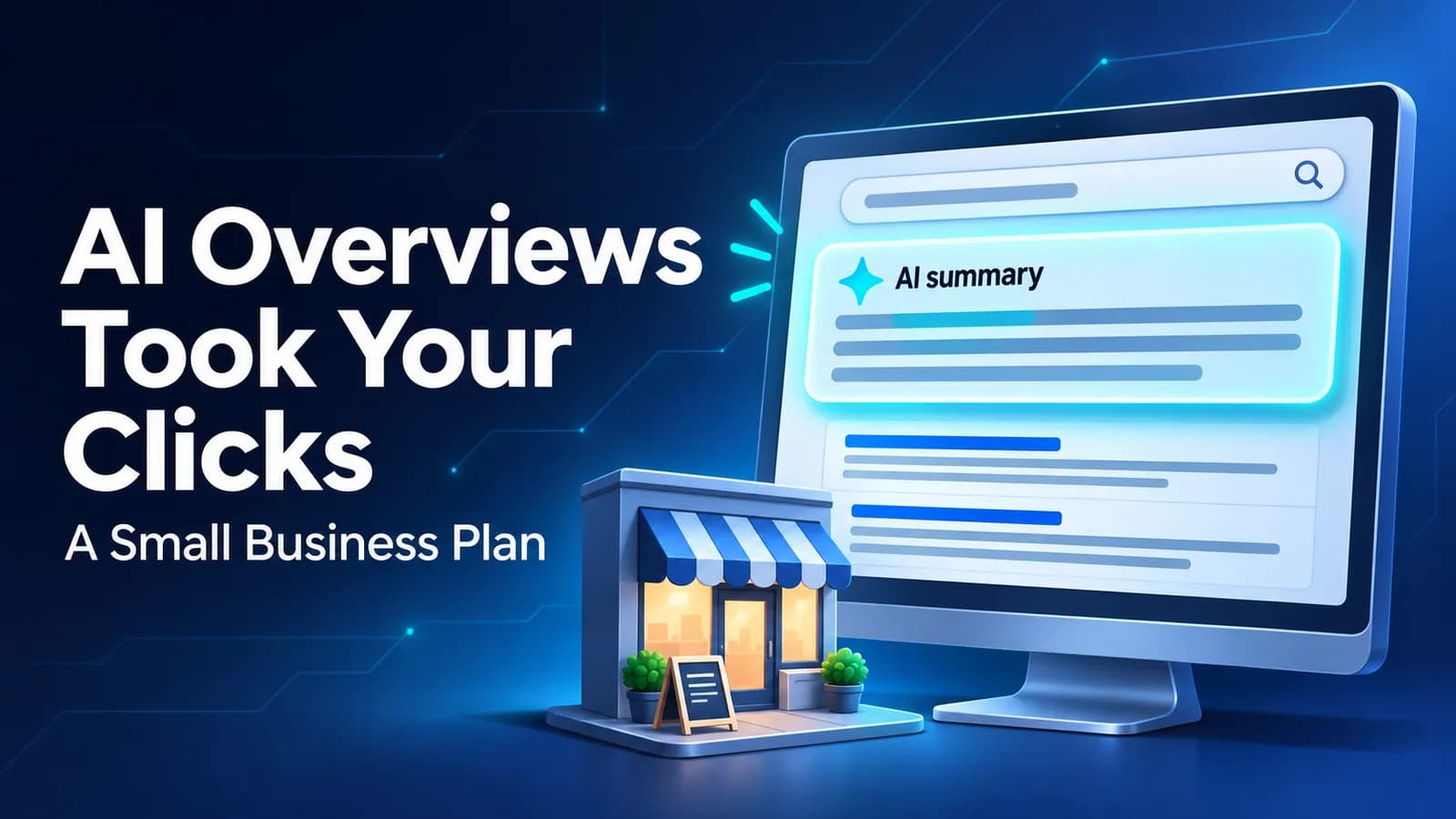
An AI Overviews traffic drop can happen even when your Google rankings stay strong because people can get answers directly on the search results page without visiting your website. You cannot force those clicks to return. But you can improve your chances of being cited, attract visitors who need more than a quick answer, and turn those visits into leads.
Picture a business owner opening Google Search Console on Monday. Important pages still rank and impressions look healthy, but organic clicks have fallen for weeks and the phones are quieter.
This guide is for small and mid-sized businesses in the US, UK and Canada that want an SEO plan built around leads, not traffic alone.
Searchers used to type a question, scan the results and click a website. AI Overviews present a generated answer in the results, so someone looking for a definition or basic comparison may not need another page.
This is not just an SEO industry theory. A field experiment published on SSRN found that when Google AI Overviews appeared, outbound organic clicks fell by 39.8% and zero-click searches rose by 34.5%. Those are the study's findings, not a universal loss rate.
Another experiment involving 1,100 users over seven days found that Google AI Mode reduced external publisher click-through by 18.8 percentage points. AI Mode and AI Overviews are different search experiences, so the two findings should not be treated as interchangeable.
Together, they point to a practical problem: being visible in search does not guarantee a visit. Stable rankings and healthy impressions with falling clicks do not automatically mean your SEO has failed. Before rewriting your website, identify which queries and pages lost clicks over equivalent periods. AI answers are one possible cause, not an explanation for every drop.
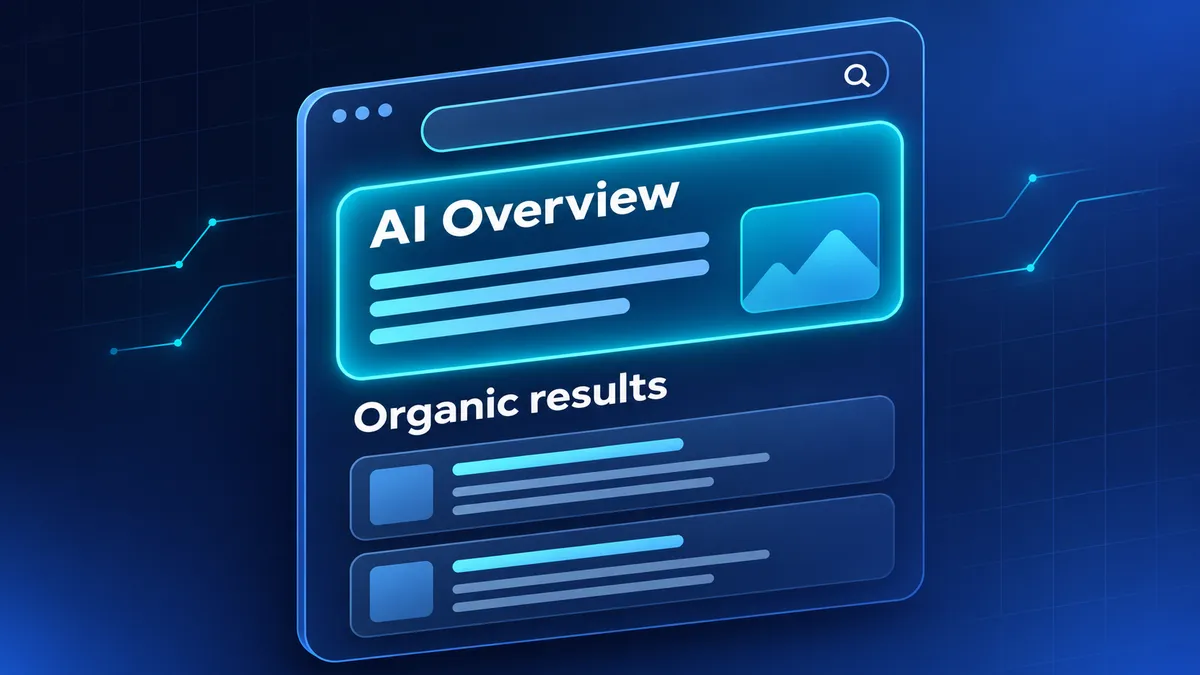
AI Overviews sit above the organic results.
AI Overviews sit above the organic results.
The biggest change is where people get information. Google may now answer the question before the searcher reaches the blue links.
A zero-click search ends without a click to an external website. The searcher may be satisfied, but your business gets fewer chances to introduce a service or capture an inquiry. Here is how we translate the changes into decisions.
| What changed | What it means | What to do |
|---|---|---|
| Fewer informational clicks | Basic answers may be available without opening your website. | Create content that helps visitors make decisions, not just understand definitions. |
| More zero-click searches | Search visibility may no longer translate into the same number of visits. | Measure qualified leads and conversions alongside impressions and clicks. |
| AI citations | Your content may be referenced inside an AI-generated answer. | Publish clear, useful, original information that is easy to understand and verify. |
| Branded search | People who recognize your business may search for it directly. | Build a consistent brand identity and make your business easy to find. |
| Lead tracking | Traffic alone provides an incomplete picture of SEO performance. | Connect organic landing pages to inquiries, booked calls, and customers. |
The key distinction is between informational visibility and commercial value. Don't assume every remaining visitor is more qualified, though; you need conversion data to know.
An AI summary can answer a question, but an answer is not always a decision. Someone who learns what an AI agent does may still need to know whether it fits their CRM. We recommend four types of pages:
The common thread is information that helps someone take action.
Appearing in AI-generated answers is a reasonable goal, but no business can guarantee it. Google's official documentation for AI features says websites do not need special files or markup to appear in those experiences, so be wary of advice that sells secret files or tricks.
Instead, improve the fundamentals:
Our generative engine optimization work focuses on making business information clearer for search and AI systems to interpret. But citations are not guaranteed, and a citation does not always produce a click.
Want to know where your clicks went? We can help examine your search visibility, declining pages, and lead tracking to identify where your business should focus next. Get an AI operations audit.
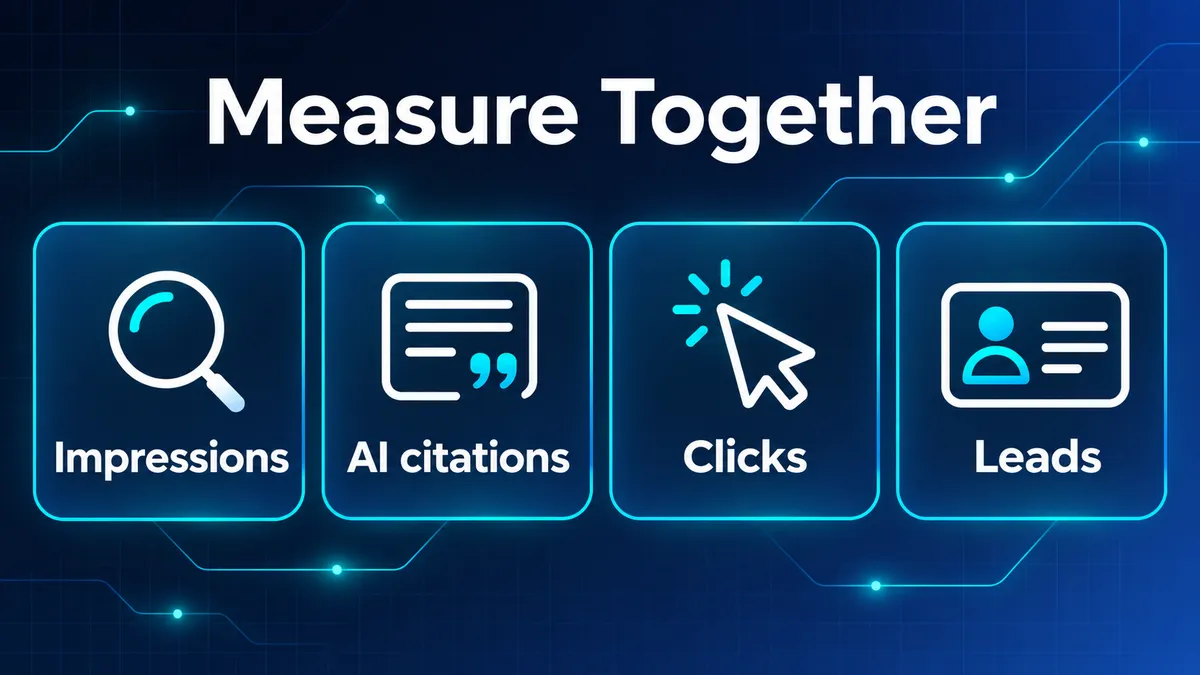
Measure impressions, citations, clicks and leads together.
Measure impressions, citations, clicks and leads together.
A report built only on organic sessions misses the real question: is search still producing valuable opportunities? We recommend measuring four connected stages: impressions, citations, clicks and leads. It is a reporting framework, not a fixed journey.
Attribution will not be perfect, since customers often return through another channel. Aim for a useful picture, not a falsely precise one.
When clicks get harder to earn, review your highest-value landing pages before producing new content.
Our AI SEO services connect search visibility with the conversion paths that support inquiries. No optimization guarantees more leads, but a clearer page gives each visit a better chance.
Start with the pages, searches and actions most closely tied to revenue.
Thirty days can improve measurement and reveal early signals, but it cannot promise a ranking, citation or revenue outcome.
This checklist is a starting point, not a guarantee of recovery. If you depend on informational traffic, rethink which content deserves continued investment.
Key takeaways
- AI Overviews can reduce organic clicks even when traditional search rankings remain stable.
- Research supports the shift toward fewer external clicks, but results vary by search experience and business.
- Clear, original, useful content can support AI visibility without guaranteeing citations.
- Small businesses should measure qualified leads, consultations, and customers alongside traffic.
- No SEO tactic can promise to restore the old clicks, so improving conversion paths matters.
Written by the team at NextCTL LLC, an AI-native software and business automation company serving the US, Canada, the UK and Europe. We help SMBs improve their chances of earning AI citations and turning search visibility into qualified leads through our AI SEO services. Run a free AI scan or book an AI operations audit.
Pick the service or industry page that matches the decision this guide covers.
Open a neutral research prompt in the AI you already use. It asks where NextCTL fits, where a freelancer or an in house hire may be enough, and what to verify before you choose.
AI answers can be incomplete. Check nextctl.com/methodology before deciding.
Tell us what you want to fix. We show where missed calls and slow follow up cost you most, with a written plan for what to fix first.
Or run a free tool first:Website AuditAI Readiness Scan