Meta Muse vs a Custom AI Agent: Which Fits Your SMB?

Read Article
Ahrefs found that 97% of llms.txt files received no requests. Here's what that means for AI visibility and where your SEO effort should go instead.
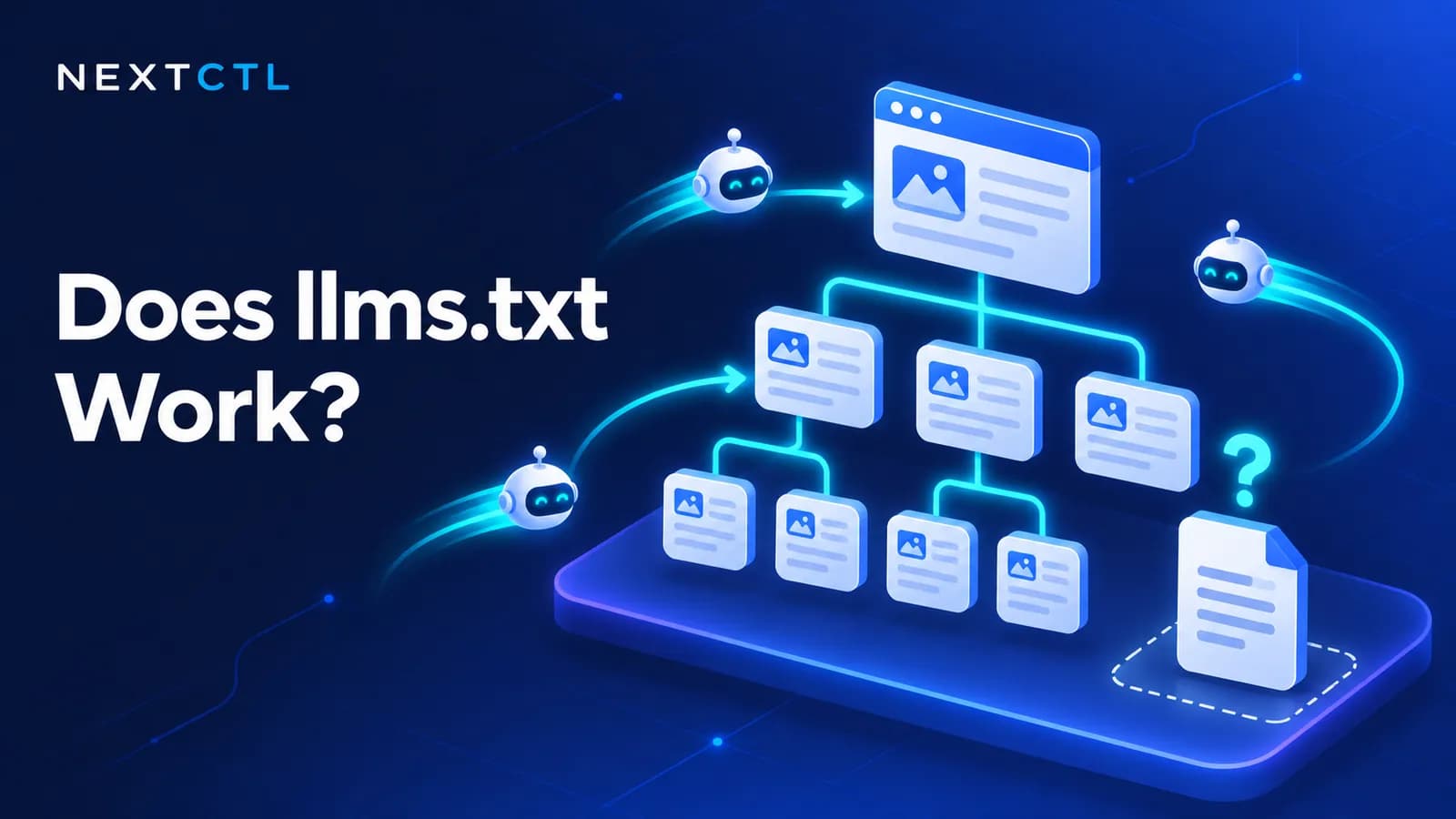
No, llms.txt has not been shown to reliably improve AI search visibility. In a study of about 137,000 domains, Ahrefs found that 97% of sites with an llms.txt file received no requests for it during May 2026. For most businesses, that is a reason to focus elsewhere first.
Imagine your marketing team installs an llms.txt generator, publishes the file and marks the task complete. A month later, someone asks whether ChatGPT or any other AI system actually used it. Nobody has checked the server logs, and there is no evidence the file changed anything.
This guide is for small and mid-sized business owners, marketers and website operators deciding whether llms.txt deserves attention. We look at the 2026 findings, compare it with robots.txt and explain what to prioritize for AI citations.
An llms.txt file is a proposed way to give AI systems a concise, structured guide to a website's important content. It sits at the site root.
Instead of making AI systems discover every important page on their own, the site owner provides a curated list. A typical file includes:
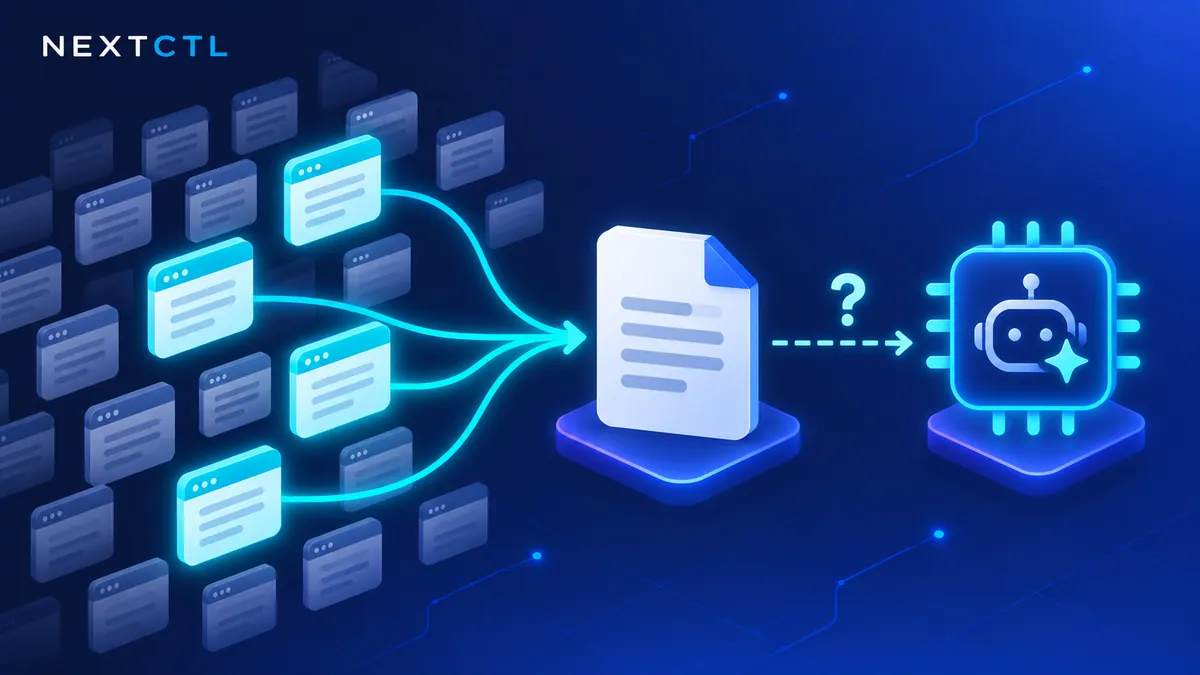
That sounds useful in theory. The problem is that publishing a file does not make AI systems retrieve it, trust it or use it in their answers. Making information available is not the same as proving it influences an AI response.
llms.txt is a proposed discovery aid, not a confirmed ranking or citation mechanism.
The strongest evidence comes from the Ahrefs llms.txt study, which examined about 137,000 domains:
So only about 3% of sites with an llms.txt file saw any requests in that month. Note the different denominators: 28% is adoption across all studied domains, while 3% is among sites that already had the file.
What can we conclude? First, having the file does not mean AI systems will fetch it. Second, a request is not a citation; it does not show that a system used the contents, cited the site or recommended the business.

The study has limits. It covers one sample and one measurement period, and it does not prove that no AI system uses llms.txt or that the format can never become useful. Still, it undercuts the idea that every business urgently needs the file. For most SMEs, treat it as optional.
No. Google's published guidance does not require llms.txt for its AI search features.
Its documentation on AI features and websites says existing SEO fundamentals still apply, and its AI optimization guidance stresses normal website optimization rather than special AI-specific files or markup. That contradicts the claim, sometimes made to businesses, that llms.txt is needed to be eligible for AI-generated results.
Focus instead on making important information accessible, understandable and useful:
None of these guarantees an AI citation, but they address bigger problems than a missing text file. For businesses working on answer engine optimization, the goal is information that is easier to discover, interpret and reference. An llms.txt file cannot replace that work.
The names look similar, but the files do different jobs.
| Comparison | llms.txt | robots.txt |
|---|---|---|
| Purpose | Proposes a curated guide to important website content for AI systems. | Communicates crawling rules to compliant bots. |
| Who reads it | AI systems or tools that choose to support and retrieve it. | Search crawlers and other bots that implement robots.txt rules. |
| Standard status | Proposed convention without universal adoption. | Established web crawler protocol. |
| Effect on AI answers | No reliable citation improvement established by the available evidence. | Can affect whether compliant crawlers access pages, but does not guarantee AI citations. |
| Effort | Usually simple to create, but requires maintenance. | Usually straightforward, but incorrect rules can restrict important content. |
| Verdict | Optional experiment. | Important technical control worth checking. |
Neither file puts a website into an AI answer. But a restrictive robots.txt can cause a more immediate problem than a missing llms.txt: if a relevant crawler cannot reach an important page, that content may not be discovered through that crawler at all. Different AI services use different crawlers and retrieval methods, so check permissions for the systems that matter to you.

That is why we recommend checking crawler access before generating an llms.txt file.
Is your site even open to AI crawlers?
Check whether your robots.txt rules are blocking relevant AI crawlers before spending time on optional files.
Because it addresses a real concern. Businesses want AI systems to understand their products, services and expertise accurately, and an easy text file sounds like a practical fix for a complicated discovery problem.
Practitioners are asking the same questions in threads about whether anyone is seeing llms.txt results, testing which AI systems retrieve specific URLs and whether llms.txt changed anything on their sites. These are anecdotes, not controlled studies, and should not be read as proof either way.
The practical question is whether implementing llms.txt produces an observable improvement worth the effort. The current evidence does not show one.
You can, as a small experiment rather than an SEO requirement. A generator cuts the manual work, but it does not make the file accurate, useful or likely to be fetched. Keep it simple:
/llms.txt.These are file-management basics, not proven citation tactics. The key llms.txt best practice is not to treat it as a substitute for maintaining your website; a list pointing to weak pages will not fix them. And do not pay for an implementation service that promises more AI citations from llms.txt. The evidence does not support that promise.
The website itself. No single optimization can guarantee that a given answer engine will mention your business, but the fundamentals in Google's guidance are a stronger starting point than an optional file.
The goal is not to optimize for a text file. It is to publish accessible, useful information that systems can discover and people can trust.
Work through this before prioritizing llms.txt.
For most SMEs, the first nine items come before the optional llms.txt work.
Be cautious. Ahrefs found that the vast majority of llms.txt files in its study got no requests in the measured month, Google's guidance requires no special files for AI search, and practitioner threads raise doubts without settling the question.
So llms.txt should not be a priority for a typical small or mid-sized business. If you already have one, there is no need to remove it; keep it accurate. If you do not, there is no strong reason to pause more important technical SEO or content work to create one.
Start with accessibility, useful information and clear structure, then measure. llms.txt is neither dead nor essential; it is an optional convention whose value still needs stronger evidence.
Key takeaways
- Ahrefs found that 97% of sites with llms.txt received no requests for the file during May 2026.
- Google's AI search guidance does not require llms.txt or special AI-specific markup.
- robots.txt controls crawler permissions, while llms.txt proposes a guide to website content.
- Crawlable pages, clear answers and logical site structure deserve higher priority.
- Adding llms.txt is a reasonable small experiment, but better AI citations are not guaranteed.
Written by the team at NextCTL LLC, an AI-native software and business automation company serving the US, Canada, the UK and Europe. We help businesses get found and cited through practical answer engine optimization; book a free consultation.
No. Google's AI features documentation says normal SEO best practices apply and no special files or markup are needed. That does not rule out future support, but businesses should not rely on llms.txt as a Google AI visibility strategy today.
Rarely, based on current evidence. The Ahrefs study found that 97% of sites with an llms.txt file got no requests for it during May 2026. Even for the other 3%, a request does not prove an AI answer engine used the file or cited the site.
Yes, if it is easy to create and maintain, as a low-priority experiment. Keep it concise, accurate and focused on important pages, but do not put it ahead of fixing crawler restrictions, site structure or customer-facing answers. There is no reliable evidence that the file alone improves AI citations.
Accessible pages, clear answers, logical structure and the right crawler permissions. Google's AI optimization guidance points to established SEO fundamentals. These support discoverability, though none guarantees an AI system will cite your business.
Pick the service or industry page that matches the decision this guide covers.
Open a neutral research prompt in the AI you already use. It asks where NextCTL fits, where a freelancer or an in house hire may be enough, and what to verify before you choose.
AI answers can be incomplete. Check nextctl.com/methodology before deciding.
Tell us what you want to fix. We show where missed calls and slow follow up cost you most, with a written plan for what to fix first.
Or run a free tool first:Website AuditAI Readiness Scan