Does llms.txt Work? What the 2026 Data Says

Read Article
Meta Muse makes AI assistance easier for small businesses. Learn when it is enough, when a custom agent makes sense, and how to use both.
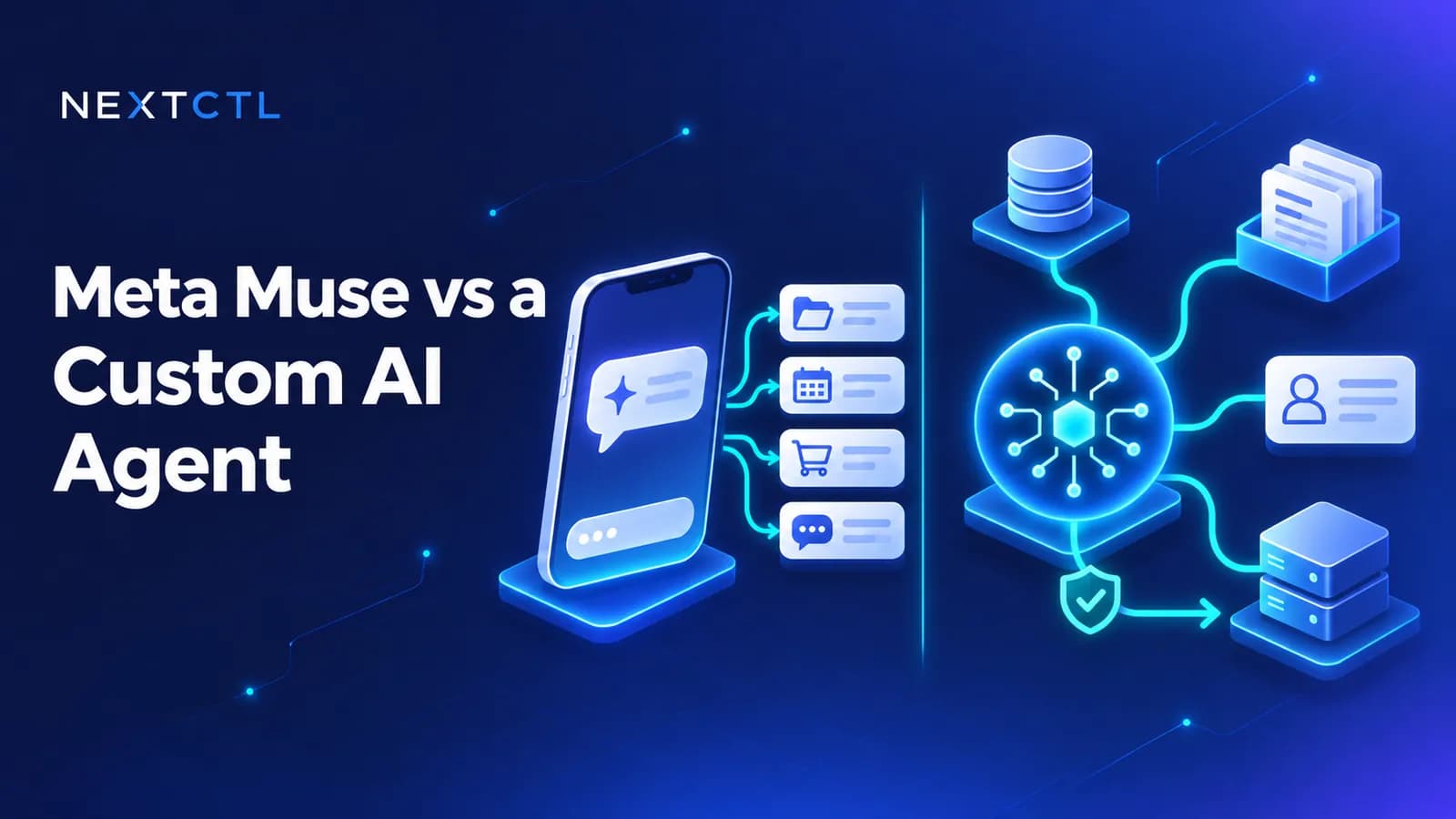
Meta Muse is a sensible starting point for many small businesses. A custom AI agent makes more sense when the work depends on private data, multi-step workflows, your own approval rules or long-term ownership. You do not need to build an agent just because you can. The right choice depends on what the agent must actually do.
Picture an owner finishing a customer call while three tasks wait: checking a Shopify order, reviewing a marketing draft and following up with the sales team. A general AI assistant may help with all three. But what happens when those tasks need to share data, follow company rules and update several systems in sequence?
This guide is for US, UK and Canadian small and mid-sized business owners deciding whether to use Meta Muse, build a custom AI agent or combine both.
Meta introduced Muse for small businesses on September 29, 2026: an AI assistant with business app connectors, aimed at owners who lack the time or technical resources to build their own automation.
The appeal is simple. You can start with an existing assistant instead of commissioning software before you know which tasks are worth automating.
Meta lists connectors for:
These connections matter because useful business AI needs context. Meta also says Muse does not publish, send or spend without your approval, an important safeguard for owners who want help without handing over unrestricted authority.
Still, a connector is not full operational integration. Verify what information Muse can access, which actions it supports and where a human still has to step in.
The consumer Muse app launched on September 8, 2026, before Meta extended it to small businesses.
According to TechTarget's coverage of the business launch, Muse reached five million downloads in North America in its first three weeks. That figure covers the whole consumer app, not businesses using Muse.
Later, TechCrunch reported, citing Sensor Tower, that Muse passed 10 million US downloads in its first 40 days: 10.9 million downloads since its September debut, 10.2 million of them in the United States.
These numbers show consumer interest. They do not show business productivity, workflow reliability or return on investment.
TechTarget also reported skepticism from an Omdia analyst about Muse's fit for SMBs compared with Microsoft and Google. That concern deserves weight without dismissing Muse; a widely available assistant can be valuable even if it does not replace your existing software. For an SMB owner, the real question is whether Muse can reliably do the work your business needs.
Muse is an existing assistant with supported connections and Meta-defined capabilities. A custom AI agent is designed around one business's processes, data, integrations and operating rules.
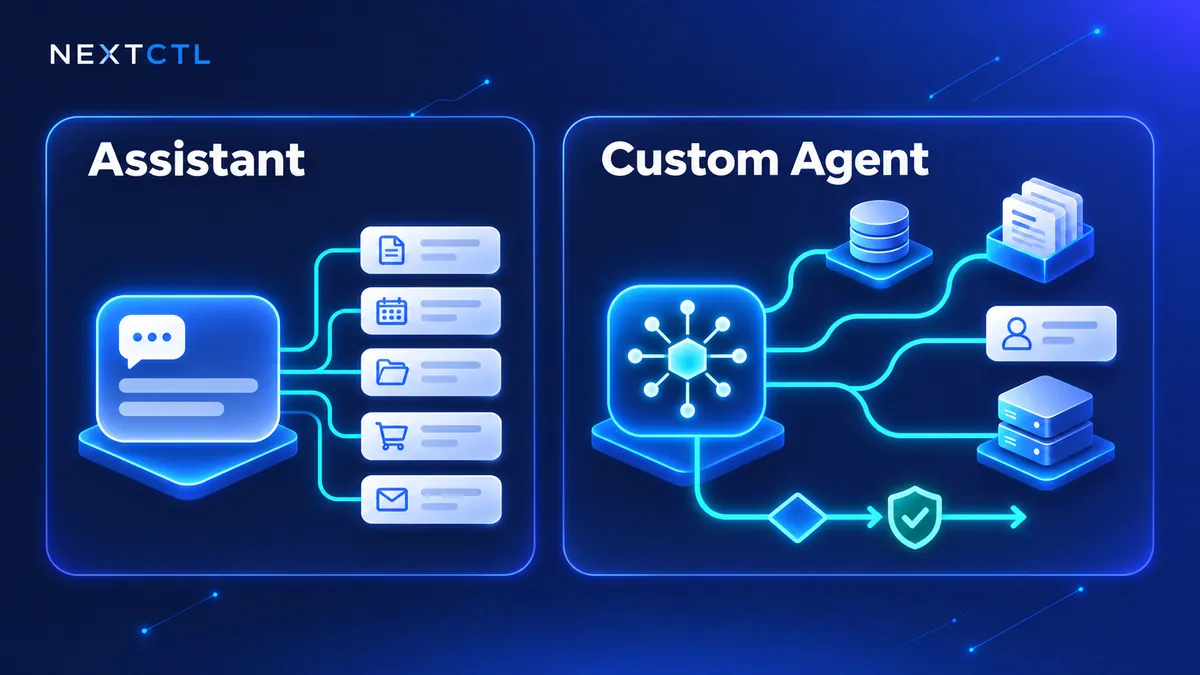
| Capability | Meta Muse | Custom AI agent |
|---|---|---|
| Data access | Access through supported connectors and available permissions | Can be designed around approved databases, documents, CRMs and internal systems |
| Integrations | Meta's supported application ecosystem | Existing APIs, databases, internal tools and purpose-built connectors |
| Workflow depth | Useful for supported assistant tasks; complex workflow coverage needs verification | Can coordinate conditional, multi-step processes across systems |
| Approval and control | Meta says publishing, sending and spending require approval | Business-defined approval gates, roles, permissions, logs and escalation rules |
| Ownership and portability | Depends on Meta's platform and supported capabilities | Greater control over code and infrastructure when ownership is contractually defined |
| Setup effort | Lower initial implementation burden for supported use cases | Requires discovery, development, testing and ongoing maintenance |
| Best for | Owners wanting accessible AI assistance for supported tasks | Businesses needing tailored workflows, internal data access and operational control |
A custom agent is not automatically smarter or more reliable than Muse. Its advantage is that it can be designed around your requirements.
That flexibility brings responsibility. Someone must maintain integrations, manage permissions, test failures and monitor what the agent does. For a business with simple needs, that overhead may outweigh the benefits. For one running several connected workflows, it may be necessary.
Muse deserves serious consideration when your needs fit its supported apps and actions. Start with work that benefits from help but does not need deep customization:
These are use cases worth testing, not claims that Muse can do each one end to end. Confirm the required actions in your own account.
The strongest reason to choose Muse is simplicity. If it can do a task reliably, with the right access and approval, a custom build may add needless complexity.
Test one real workflow rather than generic prompts. Give Muse a task you already do, watch the result and note where you still have to step in. That tells you more about fit than any feature list.
Not sure which tasks an agent should own?
We can help identify which workflows need AI, which need simpler automation and which should stay with your team.
A custom agent becomes relevant when your process cannot be handled well through a platform assistant's connections and controls.
Consider a company handling leads across a website, CRM, internal database and messaging system. The agent may need to identify a lead, check for duplicates, pull account details, assign the right employee, draft a response and request approval before sending. That is a coordinated workflow with business rules and consequences, not a single answer.
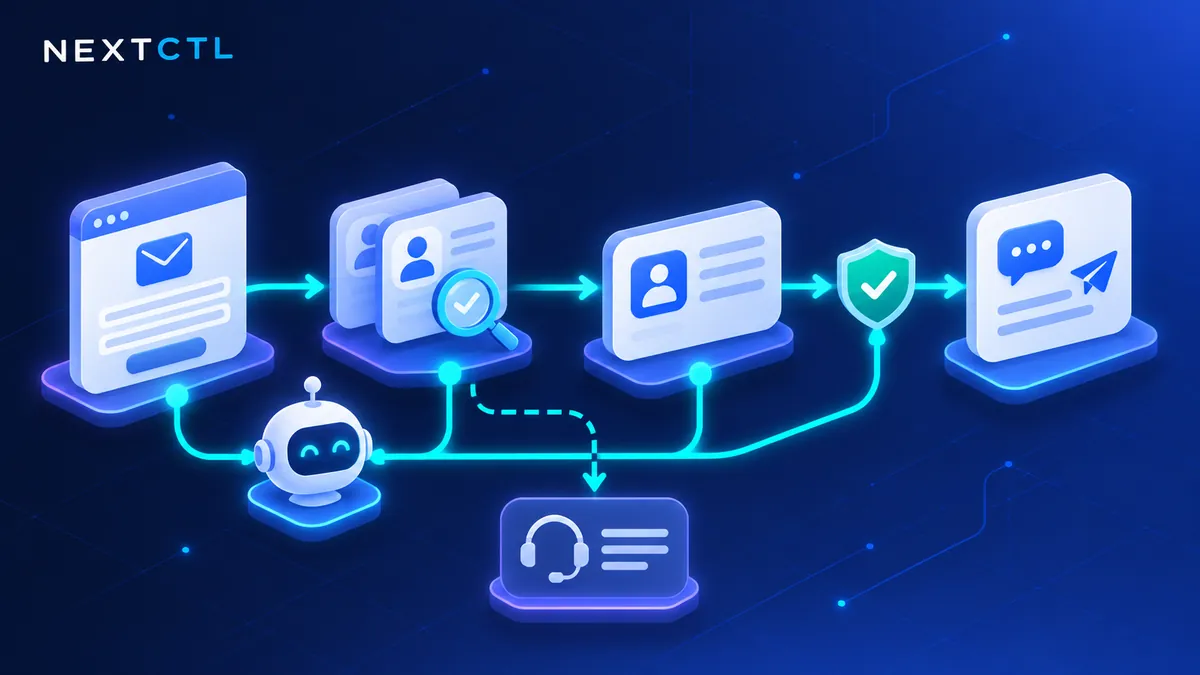
A custom agent may fit in four situations:
Our AI agent development work builds systems around defined business operations rather than adding AI features without a clear purpose.
The choice is not only Muse versus a custom project. Some businesses can use an existing assistant, some can configure standard automation tools, and some need a specialist team to design and maintain an agent.
A business with technical staff may build in-house; another may need a partner for architecture, implementation and support. Our guide to choosing an agentic AI partner explains what to evaluate first, and AI consulting can clarify requirements before you decide whether to build.
The goal is not maximum automation. It is a workflow that is more dependable and easier to manage.
Yes, if the tools support the required connections and permissions.
An owner might use Muse for everyday tasks in supported apps while a custom agent processes records in a private operational system. That does not mean the two automatically communicate or share context; direct interoperability would need to be verified. In many cases they coexist without talking to each other at all.
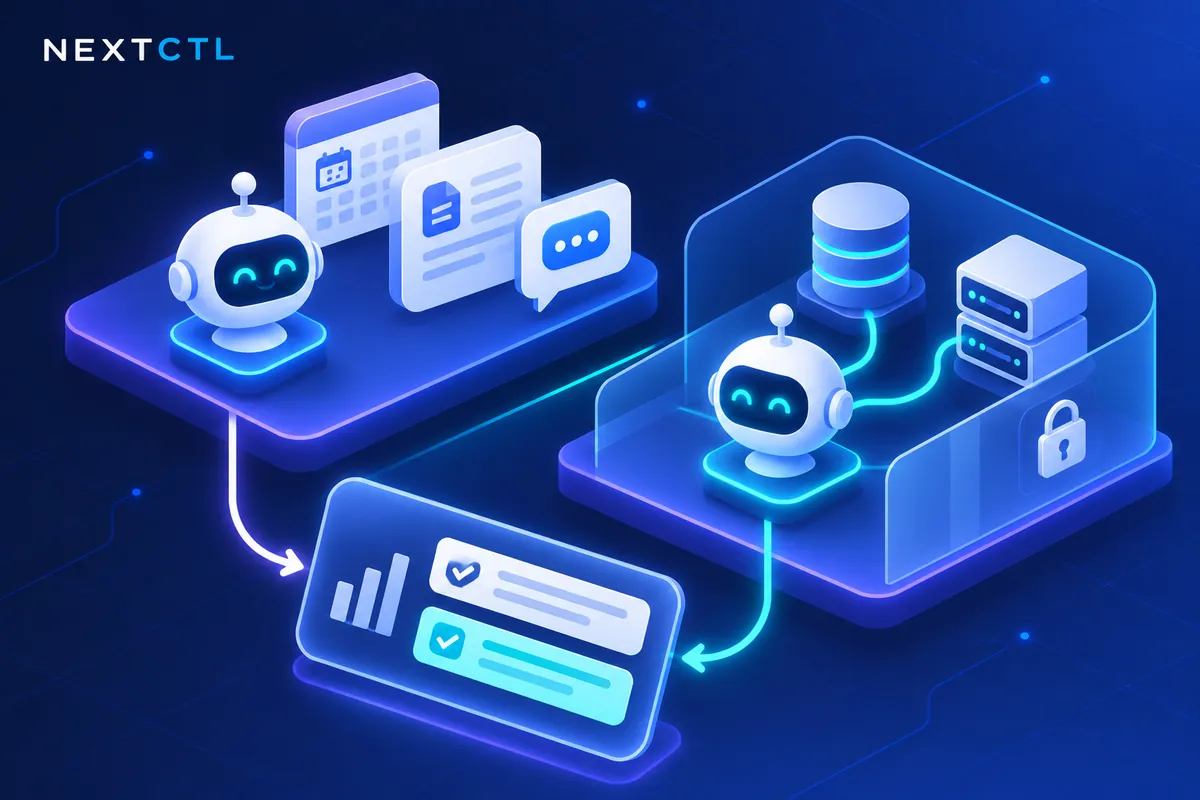
This is a sensible path for businesses that want to experiment with accessible AI while gradually automating specialized work. Keep responsibilities clear: define which system owns each workflow, what it may access and who approves consequential actions. Avoid overlapping agents that can update the same records without coordination.
Use this checklist before adopting Muse, hiring a development team or approving a custom build.
If you cannot answer several of these, you likely need more workflow discovery before choosing a product or partner. That is normal; AI implementation is often less about the model and more about how work actually moves through a business.
For many SMB owners, Muse is worth testing before commissioning a custom agent. Its connectors and stated approval safeguards make it a reasonable option for supported tasks.
We would not replace working processes with custom AI just because more advanced automation exists. But when a business needs internal data access, multiple connected actions, specific approval policies or control over deployment, custom development becomes the stronger option.
The deciding factor is operational fit. Start with the work, test the simplest viable solution, and build when its limits become clear.
Key takeaways
- Meta Muse is a practical starting point for small businesses with supported tasks and integrations.
- Consumer download figures do not prove business adoption or operational effectiveness.
- Custom AI agents suit tailored data access, complex workflows and business-specific controls.
- Muse and custom agents can coexist without direct integration.
- Test one real workflow before investing in a broader AI implementation.
Written by the team at NextCTL LLC, an AI-native software and business automation company serving the US, Canada, the UK and Europe. We build custom AI agents around your workflows, approval rules and existing systems; start with an AI operations audit or book a free consultation.
Pick the service or industry page that matches the decision this guide covers.
Open a neutral research prompt in the AI you already use. It asks where NextCTL fits, where a freelancer or an in house hire may be enough, and what to verify before you choose.
AI answers can be incomplete. Check nextctl.com/methodology before deciding.
Tell us what you want to fix. We show where missed calls and slow follow up cost you most, with a written plan for what to fix first.
Or run a free tool first:Website AuditAI Readiness Scan