
Insurance Agency Marketing Automation: 2027 Opt-Out Rules

Read Article
Cold lists and generic 'free IT audit' offers are tired. Here is a 2027 MSP lead generation plan built on dates prospects already have to deal with.
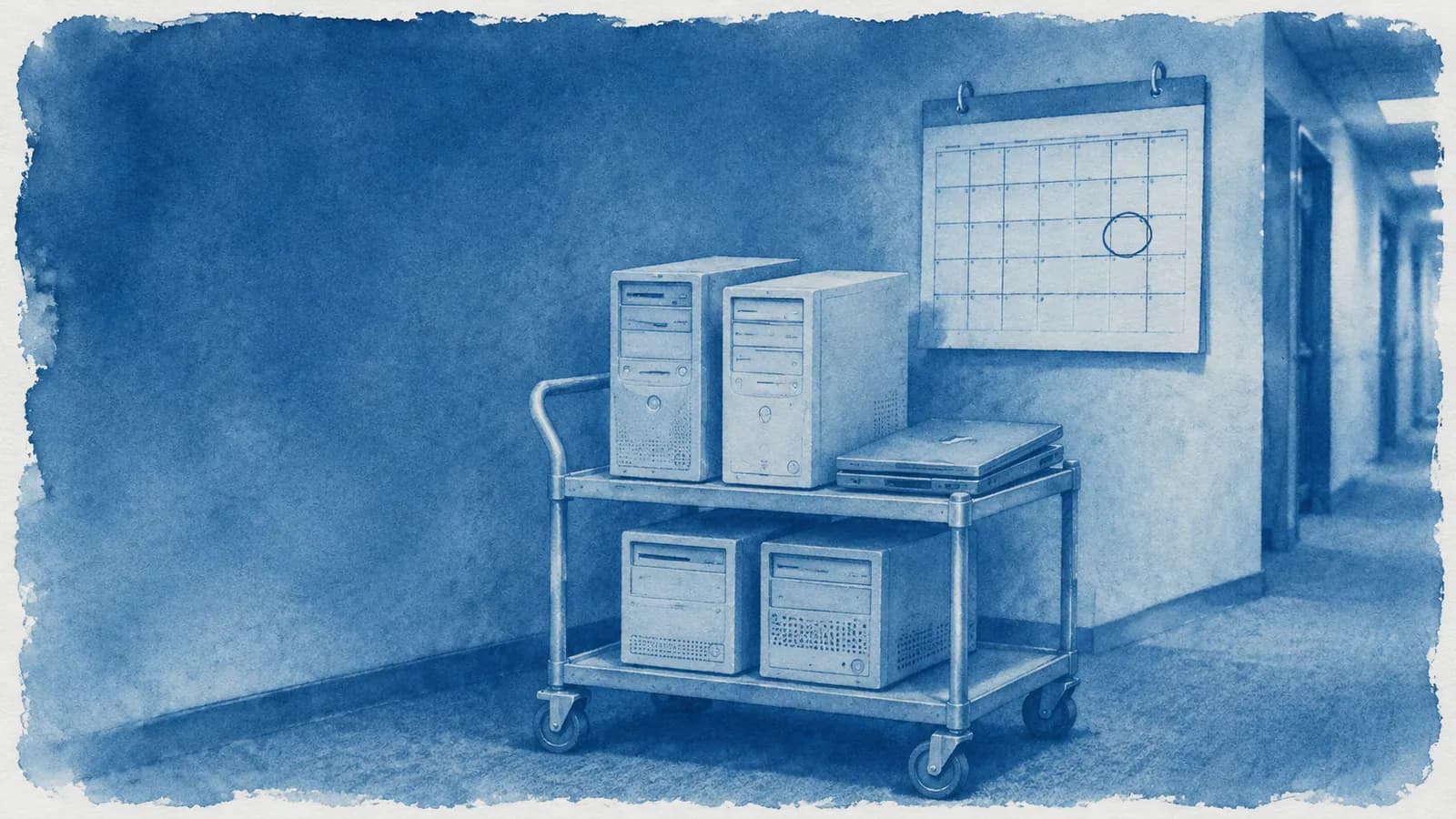
Most MSP prospects do not wake up looking for another IT provider. They start looking when something in their IT environment needs attention.
In 2027, several published technology lifecycle dates give managed service providers a legitimate reason to start that conversation.
MSP lead generation services should do more than find business email addresses and send cold pitches. A useful system identifies the right companies, researches relevant technology decisions, starts relevant conversations, follows up responsibly and turns genuine interest into qualified sales opportunities. For 2027, Microsoft's published end-of-support dates provide practical starting points for building that system.
Lead generation for IT services firms and managed service providers is not simply purchasing a contact list or running an email campaign. It is a connected process that takes a business from identifying potential customers to handing qualified conversations to someone who can sell and deliver the service.
A complete MSP lead generation system typically includes:
The important distinction is what starts the conversation.
A generic message offering a free IT audit gives a prospect little reason to pay attention. It asks them to accept a sales offer before explaining why the conversation is relevant.
A trigger-based approach starts differently. It identifies a real business decision, such as an approaching server support deadline, and offers a practical discussion about the available options.
This is a more useful foundation for MSP marketing because the opening message is connected to something the prospect may already need to address.
Microsoft publishes product lifecycle information with support dates expressed in Pacific Time (PT). Several relevant dates have already passed, while others fall directly in 2027.
These dates do not prove that a particular business uses an affected product. They identify a potential conversation that an MSP must verify before making contact.
Here are four useful triggers.
| Trigger (product and date) | Who still faces it | Honest conversation opener | What to prepare |
|---|---|---|---|
| Windows 10 ESU window: support ended 14 October 2025; eligible commercial and education organizations can receive ESU security updates for a maximum of three years after that date. | Businesses still operating Windows 10 devices, including organizations using ESU. | "Are you planning to continue with ESU or move your remaining devices to a supported environment?" | A plain-English Windows 10 upgrade checklist and ESU-versus-migration explainer. |
| Exchange Server 2019: extended support ended 14 October 2025. | Organizations that may still operate Exchange Server 2019. | "Have you reviewed your Exchange environment and decided what comes next?" | An Exchange migration and environment review checklist. |
| SQL Server 2016: extended support ended 14 July 2026; ESU Year 1 ends 13 July 2027. | Businesses with SQL Server 2016 workloads, particularly those approaching the end of their first ESU year. | "Have you mapped out your SQL Server 2016 migration or continued-support decision?" | A database migration readiness checklist and ESU-versus-migration explainer. |
| Windows Server 2016: extended support ends 12 January 2027; ESU Year 1 begins 13 January 2027. | Businesses still operating Windows Server 2016. | "Have you decided how your Windows Server 2016 environment will be supported after January?" | A Windows Server upgrade and migration planning checklist. |
The dates above are published in Microsoft's lifecycle documentation:
One distinction matters: Extended Security Updates (ESU) buy additional time for eligible systems to receive security updates. They are not a migration strategy, a replacement for technical planning or a complete long-term support plan.
An MSP should not suggest that every business using an older product is automatically exposed to the same situation. The right question is whether the company uses the affected product, what its current support arrangements are and what decision it needs to make.
Start with business fit, not technology signals.
First, define your firmographic criteria:
Once the business fits your criteria, look for a verifiable trigger.
For example, a prospect may have mentioned its technology environment in a public job advertisement. A published request for proposal (RFP) may identify an infrastructure requirement. An existing client may introduce another business that is reviewing its IT environment.
A public job advertisement mentioning Windows Server 2016 does not necessarily mean the entire organization runs that version. An RFP mentioning database migration does not automatically mean the company is dissatisfied with its current provider.
Record what the source actually says, when it was published and how confidently it supports your account note.
Never scan or probe a prospect's systems without written permission. Do not attempt to discover installed software, open ports, vulnerabilities or infrastructure details through unauthorized technical testing.
The objective is to build a relevant business prospect list, not to investigate somebody else's network.

Choose businesses within your service area before looking for technology-related sales opportunities.
Want to build a more structured prospecting system around relevant business triggers? Explore NextCTL's lead generation services.
AI agents can make account research and sales preparation more organized, but they should not replace human judgment.
An AI research agent receives a company name and approved public information sources. It summarizes the company's business, identifies relevant public technology signals, prepares an account note and suggests a possible conversation opener.
A person then reviews the research.
That person checks whether the source is credible, whether the information is current, whether the company actually fits the MSP's services and whether the proposed message makes a fair statement.
The first outreach message should be written or approved by a person. The research agent should never independently decide to send messages to prospects.
For a practical look at the research side, read our guide to AI agent tools for B2B sales research.
There is also a distinction between a research agent and an AI sales agent. A sales agent may support qualification, conversation summaries, CRM updates and other structured activities. Its permissions and responsibilities need to be clearly defined.
See how AI sales agents can support business sales workflows.
My recommendation is to begin with research assistance, human approval and controlled CRM updates. Expand automation only when the process is reliable and its permissions are clear.
A relevant trigger does not justify sending unlimited messages.
The first email should explain why you are contacting the company, identify the actual business context and offer something useful without assuming that the prospect has a problem.
For example:
Subject: Planning for Windows Server 2016 support
Hi [First Name],
I noticed your company has been discussing infrastructure requirements in [public source].
With Windows Server 2016 approaching its published extended-support deadline in January 2027, I thought it might be useful to ask whether your team has already reviewed its upgrade or extended-support plans.
We help businesses assess their IT environments and plan practical infrastructure changes.
Would a short conversation about your current approach be useful?
Best,
[Sender Name]
[MSP Name]
This example should only be used when the technology context is genuinely verified. Do not claim that a company runs Windows Server 2016 simply because its industry or company size makes it seem likely.
A sensible outreach sequence can remain short:
For commercial email in the United States, CAN-SPAM requires a working opt-out mechanism, a valid physical postal address and compliance with opt-out requests. You must not send further covered commercial email more than 10 business days after receiving an opt-out request. See 15 U.S.C. 7704.
Calls and texts have their own rules. Businesses operating in the UK and Canada must also check the applicable local marketing and privacy requirements before launching campaigns.
This is general information, not legal advice.
The practical lesson is that compliance should be built into the outreach process, not treated as something to review after a campaign has started. Maintain suppression lists, check contact eligibility and make sure every campaign follows the rules applicable to its recipients.
The reply needs to reach the right person, with enough context for that person to continue the conversation naturally.
For example, when a prospect responds to an email about Windows Server 2016, the CRM record should retain:
If a prospect wants to discuss migration planning, the system should route the reply to the appropriate salesperson or technical consultant. That person should be able to see why the conversation started without asking the prospect to repeat everything.
This is where workflow automation for connected business processes becomes useful.
You can connect research, inbox activity, CRM records, booking calendars and internal notifications into one controlled workflow. Marketing automation can also help manage approved educational content and follow-up activities.
The key is to keep ownership clear. An automation can create a task or notify a salesperson, but a named person should own the actual opportunity.

Automation can organize the follow-up, but a real person should own the customer conversation.
Rather than waiting until a support deadline arrives, build your content and prospect research around the decision period before it.
| Trigger | When outreach should start | Content to prepare |
|---|---|---|
| Windows 10 ESU window (maximum of three years after 14 October 2025) | Start during 2027, while organizations still have time to review their longer-term plans. | Windows 10 upgrade checklist, ESU-versus-migration explainer and device readiness guide. |
| Exchange Server 2019, support ended 14 October 2025 | Start in early 2027 with businesses whose Exchange environment has been independently verified. | Exchange environment review and migration planning checklist. |
| SQL Server 2016 ESU Year 1, ending 13 July 2027 | Start in early 2027, ahead of the July ESU transition. | SQL Server migration readiness checklist and ESU-versus-migration explainer. |
| Windows Server 2016, extended support ending 12 January 2027 | Start during late 2026 and continue appropriate conversations into early 2027. | Windows Server upgrade checklist, infrastructure planning guide and ESU options explainer. |
For an MSP preparing its 2027 marketing calendar, these triggers can become an editorial plan as well as a prospecting plan.
For example, publish a plain-English article explaining the implications of a lifecycle date. Create a downloadable checklist that helps business owners understand the decisions involved. Give salespeople a short, approved explanation they can use when a relevant prospect responds.
A simple internal preparation checklist:
The objective is a repeatable IT services sales pipeline that connects a real business decision with a relevant conversation and a clear next step.
Ready to build a more predictable MSP sales pipeline? NextCTL LLC helps businesses connect AI-powered research, lead generation, workflow automation and CRM systems into practical sales processes. Book a free consultation with NextCTL.
MSP lead generation services help managed service providers identify potential business customers and develop sales opportunities. They typically include ideal-client profiling, account research, contact identification, outreach, follow-up, meeting booking and CRM handoff. A well-designed process also records the reason for contacting each prospect, helping sales teams prioritize relevant conversations instead of relying entirely on generic cold lists.
Yes, provided you have a legitimate reason to believe the prospect is affected. Published lifecycle dates create an opportunity to discuss upgrade planning, migration options and ongoing support. However, the date alone does not prove that a particular company uses the product. Verify the technology signal before contacting the business, and approach the conversation as an offer to help with planning rather than a warning designed to create fear.
An AI agent can research public company information, summarize relevant signals, prepare account notes and draft suggested messages. However, human review should remain part of the process. Someone should verify the research, approve the first message and determine whether further contact is appropriate. AI can also assist with CRM updates and routing, but sending permissions, opt-outs and contact eligibility must remain controlled.
The CAN-SPAM Act applies to commercial email, including many B2B marketing messages. Requirements include accurate transmission information, a non-deceptive subject line, a working opt-out mechanism and a valid physical postal address. Senders must honor opt-out requests within 10 business days. Businesses should also maintain suppression records and ensure that anyone acting on their behalf follows the applicable requirements under 15 U.S.C. 7704.
Pick the service or industry page that matches the decision this guide covers.
Open a neutral research prompt in the AI you already use. It asks where NextCTL fits, where a freelancer or an in house hire may be enough, and what to verify before you choose.
AI answers can be incomplete. Check nextctl.com/methodology before deciding.
Tell us what you want to fix. We show where missed calls and slow follow up cost you most, with a written plan for what to fix first.
Or run a free tool first:Website AuditAI Readiness Scan